Pick a maze that fits the outing
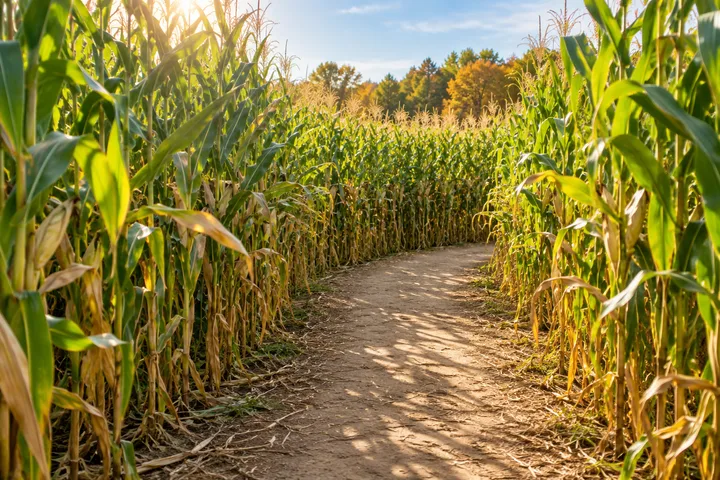
631 of our 922 farm listings (68%) mention a maze. That label alone does not tell you whether it is a short children’s loop, a longer navigation challenge, or a nighttime event. Ask the farm for an estimated route length, a map, and an exit option.
Short or first maze
Look for a children’s loop or clear turnaround point. Pair it with another activity so the whole trip does not depend on a long walk.
Longer challenge
Ask about checkpoints, average completion time, and whether the route has a marked exit. Leave enough daylight and time for your group’s pace.
After dark
Check whether it is a flashlight maze or a haunted event, its age guidance, ticket window, and flashlight rules.
The best timing depends on the farm and your group. A dry afternoon may make walking easier; a wet week may leave soft ground even if rain has stopped. Check the farm’s current maze status before traveling.
Know the route and the exit
- At the entrance, get the map. Photograph a posted map if allowed, and ask whether any sections can be skipped.
- Agree on a meeting point. Keep children within your group and choose a visible place outside the maze in case people get separated.
- Ask how to leave early. Staff may have a marked exit or a number to call. Do not rely on phone reception in the field.
- Check the surface. Corn rows can be uneven, muddy, and narrow. Ask about accessible alternatives if anyone uses a stroller or mobility aid.
Our listings also mention 141 after-dark or haunted options. That count groups different activities; it does not mean every one is a nighttime corn maze.
Mazes in our state listings
The counts reflect what farms publish in our database. A larger count can reflect how many farms we track in a state, so use the table to browse, then confirm the specific event.
Explore the directory data by state
| State | Farms tracked | List a maze | List an after-dark option |
|---|---|---|---|
| Florida | 80 | 42 | 13 |
| Georgia | 38 | 31 | 16 |
| Ohio | 32 | 29 | 4 |
| Pennsylvania | 38 | 29 | 11 |
| California | 40 | 28 | 4 |
| New York | 32 | 25 | 8 |
| Oregon | 23 | 18 | 3 |
| Tennessee | 22 | 18 | 4 |
| Texas | 24 | 18 | — |
| Washington | 20 | 18 | — |
| Maryland | 20 | 17 | 1 |
| Illinois | 23 | 16 | 7 |
| Kentucky | 23 | 16 | 2 |
| New Hampshire | 23 | 15 | 4 |
| Indiana | 18 | 14 | — |
| Michigan | 24 | 14 | 2 |
| South Carolina | 17 | 14 | 2 |
| Virginia | 18 | 14 | 1 |
| Colorado | 16 | 13 | — |
| Kansas | 15 | 13 | 1 |
| Massachusetts | 17 | 13 | 2 |
| Wisconsin | 18 | 13 | 3 |
| Alabama | 13 | 12 | 2 |
| Iowa | 19 | 12 | 1 |
| North Carolina | 22 | 12 | 2 |
| Arizona | 11 | 11 | 1 |
| South Dakota | 18 | 11 | 5 |
| New Jersey | 12 | 10 | 1 |
| Connecticut | 16 | 9 | 2 |
| Idaho | 12 | 9 | 2 |
| Louisiana | 16 | 9 | 1 |
| Mississippi | 24 | 9 | 2 |
| West Virginia | 17 | 9 | 6 |
| Arkansas | 11 | 8 | 2 |
| Delaware | 15 | 8 | 3 |
| North Dakota | 10 | 8 | 2 |
| Montana | 11 | 7 | 4 |
| Oklahoma | 8 | 7 | 1 |
| Rhode Island | 7 | 7 | 3 |
| Vermont | 15 | 7 | 4 |
| Maine | 14 | 6 | 1 |
| Missouri | 8 | 6 | 1 |
| New Mexico | 8 | 6 | 2 |
| Nevada | 8 | 5 | 1 |
| Utah | 4 | 4 | 2 |
| Minnesota | 23 | 3 | — |
| Alaska | 5 | 2 | — |
| Hawaii | 5 | 2 | 1 |
| Nebraska | 7 | 2 | 1 |
| Wyoming | 2 | 2 | — |
Pack for walking and visibility
Comfortable closed-toe shoes are useful on uneven paths. For an evening maze, bring a layer and a charged phone; if flashlights are allowed, a small one gives you a backup. Check the farm’s rules before bringing equipment, and keep hands free for children or uneven ground.
Four things to ask before buying tickets
- Is the maze open on our date, and is its ticket included in admission?
- How long is the route, and is there a shorter loop or early exit?
- What changes if the ground is wet?
- For a night event, is it haunted, what ages is it meant for, and are lights allowed?
Find farms by state and compare their published activities before choosing a maze.